
Searching Clay County Criminal Dockets
Venue comes first. Clay Circuit Court, sitting in Alabama's 40th Judicial Circuit, hears the felonies. Clay District Court takes state misdemeanors, preliminary felony matters, state traffic, and certain noncapital guilty pleas. A misdemeanor or ordinance charge that started with Ashland or Lineville police normally stays in that municipal court. For the calendar itself, the Clay Trial Docket lets you search by setting date, with an optional last name. Picking a result leads you toward paid detail.
That detail lives in AlacourtACCESS "Just One Look." Free access exists too. The Clay court homepage points to a public computer in the Circuit Clerk's office at 25 Court Square in Ashland. The criminal, traffic, and warrant desk answers at 256-252-4193. You can also ask at the counter, mail a precise request to P.O. Box 816, or fax 256-354-2444. Older images and certified records usually need that clerk route.
- Identify Circuit, District, or municipal venue from the charge and agency.
- Gather the full name and case number, if available.
- Search the setting-date docket or buy one matching Case Detail.
- Read actions in date order and locate the newest future setting.
- Call or visit the clerk when a match, image, or certified disposition is needed.
Clay County Criminal Docket Prefixes
Alabama case numbers carry a county code, a division, the year, and a sequence. Clay County's code is 14. So 14-CC-YYYY-sequence marks a Circuit Criminal matter, 14-DC-YYYY-sequence marks District Criminal, and 14-TR-YYYY-sequence marks state traffic. These are format examples, not real cases.
| Prefix | Likely docket | Starting custodian |
|---|---|---|
| 14-CC | Circuit Criminal | Clay County Circuit Clerk |
| 14-DC | District Criminal | Clay County Circuit Clerk |
| 14-TR | State traffic | Clay County Circuit Clerk |
A municipal case does not turn into a Clay Circuit case just because it arose inside the county. Check who cited or arrested the person, and trace any appeal. Those two facts separate lookalike matters with similar names.
Inside a Clay County Criminal Docket
Buy a Case Detail and you may see case identity and status, parties, setting dates, the chronological Case Action Summary, actions and rulings, financial history, costs, and images. Not every result shows everything. The system does not promise a statute, offense class, bond label, attorney field, courtroom, or attachment. Trust only the fields actually present.
| Case number | Clay code, division, year, and sequence, such as 14-CC-YYYY-sequence. |
|---|---|
| Case Action Summary | The dated index of filings, settings, actions, and rulings. |
| Setting dates | Past and future court appearances; later reset entries control. |
| Disposition | The precise plea, dismissal, acquittal, conviction, or other result entered. |
| Financial history | Costs and payments, which do not by themselves prove the outcome. |
Remember that a docket is an index. The filed indictment, order, or sentencing paper itself sits in the clerk-controlled case file. When you need formal proof, request that exact document or a certified copy instead of a portal snapshot.
Reading Clay County Criminal Docket Events
Every event line is a procedural fact, nothing more. A complaint or indictment states an accusation, not a conviction. Bond sets release and appearance conditions. A setting marks a planned event. Plea, adjudication, sentence, dismissal, and acquittal each get their own entry, so one line never tells the whole story.
- Indictment
- A grand jury's felony charging instrument.
- Arraignment
- The stage when the charge and plea are addressed.
- Continuance
- A move of a setting to a later date; requesting one does not grant it.
- Disposition
- The entered outcome, which must be read in its exact wording.
- Sentence
- The punishment ordered after a conviction.
Costs sit in their own financial block. They can linger after later court events, so never treat them as a sign of guilt or final outcome. The newest court action and the filed order give the safer reading.
How a Criminal Case Moves
A Clay County felony may start with a complaint and District Court preliminary activity. Or it may start with an indictment. Either way, it lands in Circuit Court. Misdemeanors usually stay in District Court unless municipal jurisdiction or an appeal moves them. Follow the Case Action Summary. It traces the path one dated entry at a time.
Docket flow: Complaint or Indictment › Preliminary Proceedings › Arraignment › Pretrial Settings › Plea or Trial › Disposition › Sentencing › Appeal
A municipal or District criminal conviction often goes to Circuit Court for a trial de novo under Alabama Criminal Rule 30.1. That term means a new trial. A Circuit criminal appeal then heads to the Alabama Court of Criminal Appeals. Each court change can open a new docket. So the full story may not sit on one screen.
Clay County Criminal Docket Access
Just One Look charges $9.99 for a name or case-number search. That fee includes one Case Detail. Every added detail picked from a name result costs another $9.99. Document images require the detail purchase first. They run $5 for the first 20 pages, then $0.50 per page. Keep in mind the saved report is a dated snapshot that can go stale.
| Channel | Best use | Limit |
|---|---|---|
| Just One Look | Remote detail and available images | Paid snapshot; not certified |
| Clerk public computer | Free inspection of electronic court data | Requires an office visit |
| Division phone | Confirm a setting or request path | A call does not alter a court date |
| Counter or mail | Copies, archives, and certification | Call first for cost and payment terms |
Alacourt subscribers can monitor cases, and AlaFile receives filings and service. AlaFile is not the public read-only docket. The practical Clay County criminal docket chain runs remote search, free courthouse terminal, direct clerk line, then counter or mail for the official document.
Courts That Hold Criminal Dockets
One office holds both trial courts' criminal records: the unified Clay County Circuit Clerk. The official clerk description names that office as the record keeper. Circuit Court handles the felonies. District Court handles state misdemeanors, preliminary felony work, and state traffic. It also takes related matters within its jurisdiction. For the city side, the Clay magistrates and warrants information explains the county and municipal divide.
Ashland and Lineville municipal clerks keep the city traffic, ordinance, and city misdemeanor files. Felonies never pass through municipal adjudication. If a name search misses the case you expected, ask who started it. Was it city police, a county deputy, or a state trooper? Probate Court keeps no criminal dockets.
Note: An appeal from a municipal conviction may create a Clay Circuit Court docket. The original city file stays with the municipal clerk.
Missing Clay County Criminal Dockets
A blank screen on a search does not prove the case is gone. The Clay Trial Docket itself warns that some cases fail to appear. Several things can hide a Clay County court docket from an electronic search: indexing quirks, older files, a case held by a municipal court, an unserved warrant, or a sealed record. A confidential juvenile matter can hide one too.
Check the case number and the venue first. Then try a docket search by setting date. Leave the last-name box blank when that fits. The clerk's public computer is another route. The criminal desk will take a call if you describe the exact record you want. For an old matter, ask about archival holdings and Alabama Archives microfilm. One hard limit stands: the Clay courthouse burned in 1875, so some nineteenth-century records simply do not exist.
No online match? Do not infer an outcome. Confirm custody and access with the Clay County Circuit Clerk or the correct municipal clerk.
Sealed Dockets and Public Access
Most Clay Circuit and District records sit open for inspection at the clerk's office. A rule, a statute, a sealing order, or a confidentiality limit can change that. Rule 30 makes the clerk's case file the official record. Statewide privacy rules guard confidential content. They allow sealing, or a redacted public version, when the court directs it.
Juvenile files are a different animal. The juvenile confidentiality statute locks down juvenile legal and social files. The official page for that section spells out the bar. A juvenile docket is not an ordinary adult criminal docket, and the statute is why.
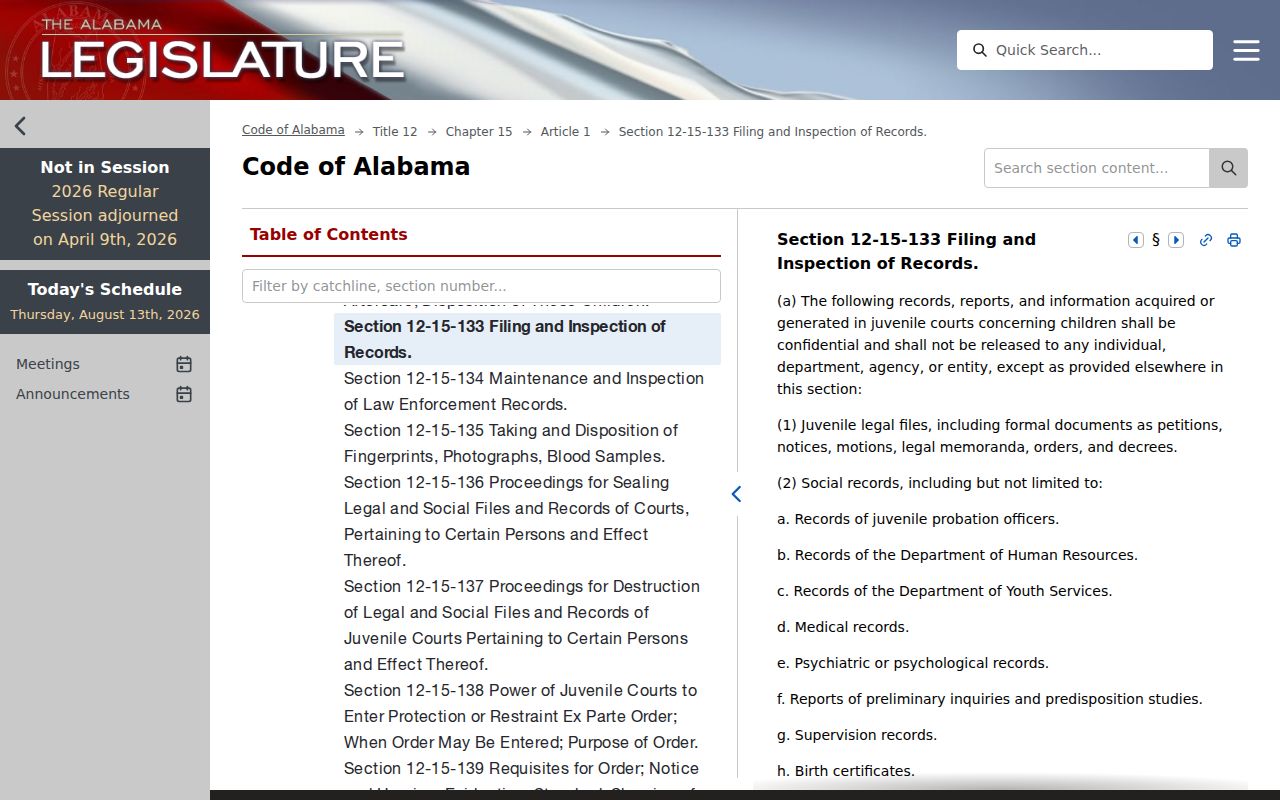
That restriction travels with the juvenile record, even when a public name search would be the easy route.
A parallel shield sits in the Protection from Abuse confidentiality provision, which protects listed addresses, telephone information, family contacts, and shelter locations.
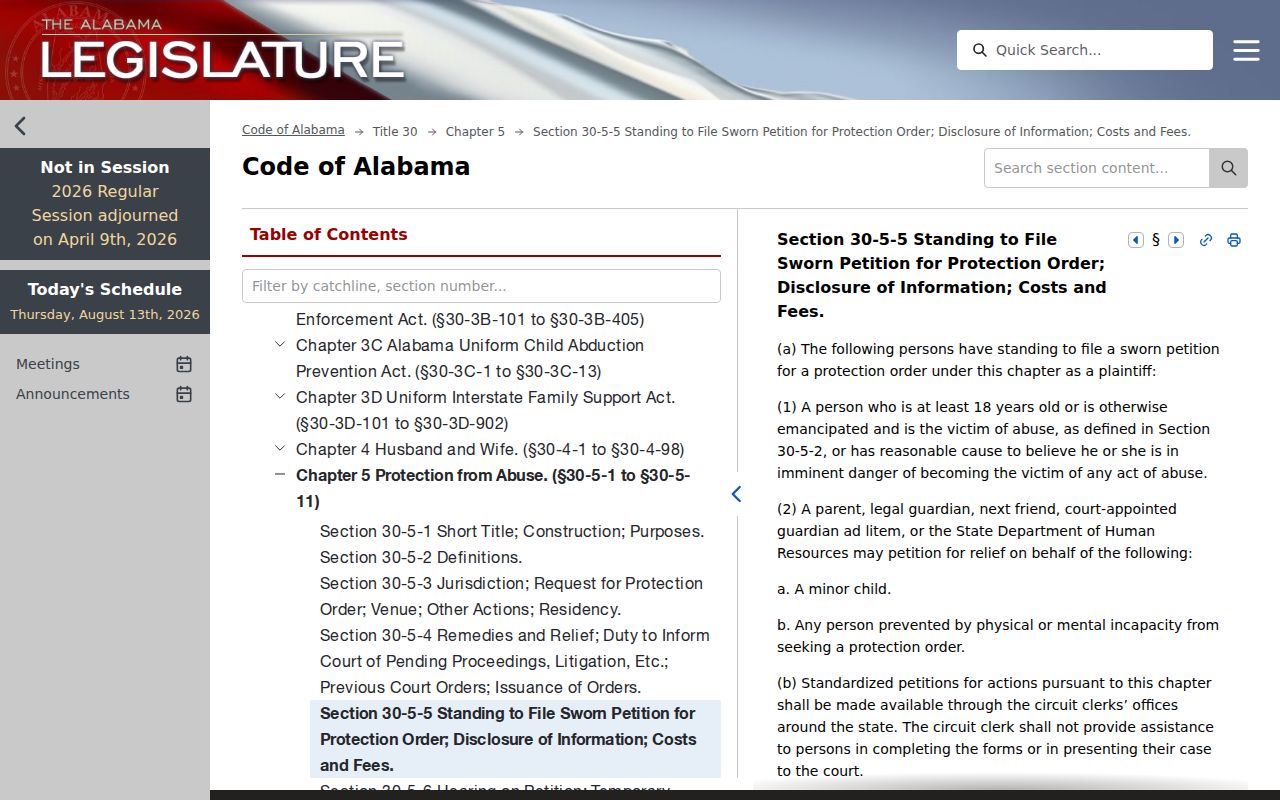
The docket itself can stay public while the filing behind it gives up no sensitive data.
Clay County Criminal Docket Expungement
An expungement order plus Alabama law governs what happens to the record. Do not assume it disappears from every system an authorized user can see. Clerk staff carry out the order. They do not casually rule on eligibility or public access.
The Alabama criminal expungement chapter opens with the statutory eligibility rules.
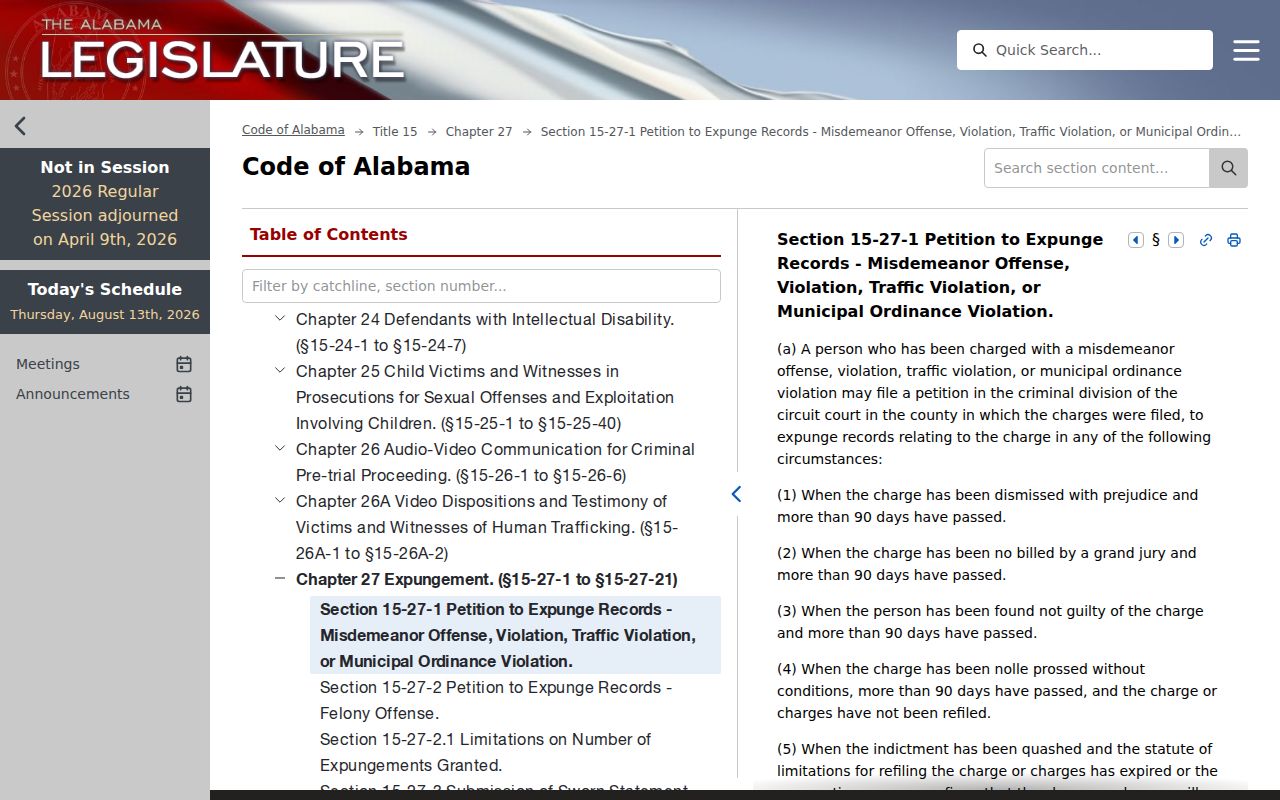
The Clay fee chart lists a $255 CV00 filing fee for an expungement petition. Confirm the amount with the clerk before you file.
Key access rules:
Alabama Court-Record Privacy and Confidentiality Rules govern public, confidential, redacted, and sealed court information.
Judicial Administration Rule 30 keeps the official case file in clerk custody and permits inspection unless access is restricted.